A high bill deserves a clear explanation. We look at what your solar produces, what your home uses, and how your utility bills you, then build a plan around the cause.
The full picture
01System performance↗
02Household consumption↗
03Your rate & NEM status↗
Already have solar?
You’re in the right place.
NEM 1, NEM 2 & Solar Billing
A plan built around your utility.
Installed by someone else?
Orphan systems welcome.
Understand the bill before the fix
The answer isn’t always more panels. We compare your utility statements, solar production and original system design to see where the gap comes from.
01 / Lost production
Equipment faults, shading, soiling or system downtime can leave you buying electricity your panels should have produced.
WE CHECKActual output against expected performance.
02 / Changing demand
An EV, a pool, more air conditioning, electric appliances or a growing household can outpace the system you originally needed.
WE CHECKHow much you use, and when you use it.
03 / An original mismatch
An undersized design, optimistic production estimate or installation problem may have left a shortfall from the beginning.
WE CHECKDesign assumptions, equipment and energy needs.
The timing matters, too. Even a healthy system can leave a bill when evening imports cost more than daytime exports earn. We also separate energy charges from fixed fees and other charges solar may not eliminate.
No more guessing at the true-up
We review your last settlement and current billing cycle to explain your remaining utility costs and estimate where the year may be heading.
A useful projection needs seasonal usage, production and your actual tariff. Under the Solar Billing Plan, monthly energy bills matter alongside the annual settlement.
Your true-up review
01
Read the charges and creditsUtility + CCA statements, rate plan and true-up date.
02
Measure the energy gapAvailable production, grid imports and consumption data.
03
Compare realistic optionsRepair, usage changes, storage or a separate solar addition.
04
See the whole costEstimated remaining utility charges plus existing solar payments and any proposed upgrade cost.
The right fix for the right reason
Your NEM program helps shape the decision. Your production, usage patterns and project economics finish the picture.
01
If the system is producing less than it should, diagnose the loss and address eligible repairs before sizing an addition.
Get back what you’re missing
02
If a healthy system no longer produces enough energy, evaluate a separately designed addition around your current usage.
Close a production gap
03
If production and demand happen at different times, evaluate storing energy for later use and reducing costly grid imports.
Use more solar when it matters
04
If monitoring is missing or incomplete, establish compatible production and consumption monitoring to guide the next decision.
Start with better data
A battery shifts available energy; it does not create more solar production. Some homes benefit from a combination of solutions.
Expand thoughtfully
Before recommending an upgrade, we verify your utility, approved system size, interconnection documents and remaining legacy eligibility.
NEM 1.0
Check the original approval, rate schedule and remaining legacy period. An older system may need repairs or monitoring before expansion.
NEM 2.0
Compare time-of-use imports and exports, production shortfall and storage value while reviewing expansion eligibility.
NEM 3.0
Common name for the Solar Billing Plan / Net Billing Tariff
Evaluate self-consumption, battery operation and the hourly value of exports. Review monthly bills as well as annual settlement.
Where eligible, a separate, controlled non-export addition can serve your home while the original system retains its approved NEM arrangement. This is one option we evaluate for larger additions.
Separate equipment alone does not preserve NEM. The design, export controls, application and utility approval must qualify. Existing legacy expiration dates still apply. Municipal utilities and irrigation districts use their own rules.
Leased solar & power purchase agreements
An existing PPA or lease does not automatically rule out a separate solar addition.
CSS designs additions as independent systems with their own equipment and design. We evaluate how an addition can address your remaining energy needs while keeping the original system separate.
We first review your Sunrun, SolarCity/Tesla or other provider agreement, warranty terms and any required consent. Your existing payment obligations remain in place.

Separate systems. One home.
Already installed
Existing equipment
Existing agreement
Planned by CSS
Separate equipment
Purpose-built design
✓Designed separately. Reviewed together.
Utility requirements, roof access, electrical capacity and provider terms all inform the plan.
Concept only, not a wiring diagram. Independent equipment does not override a lease, PPA, warranty or utility agreement. CSS is an independent contractor, not a representative of these providers.

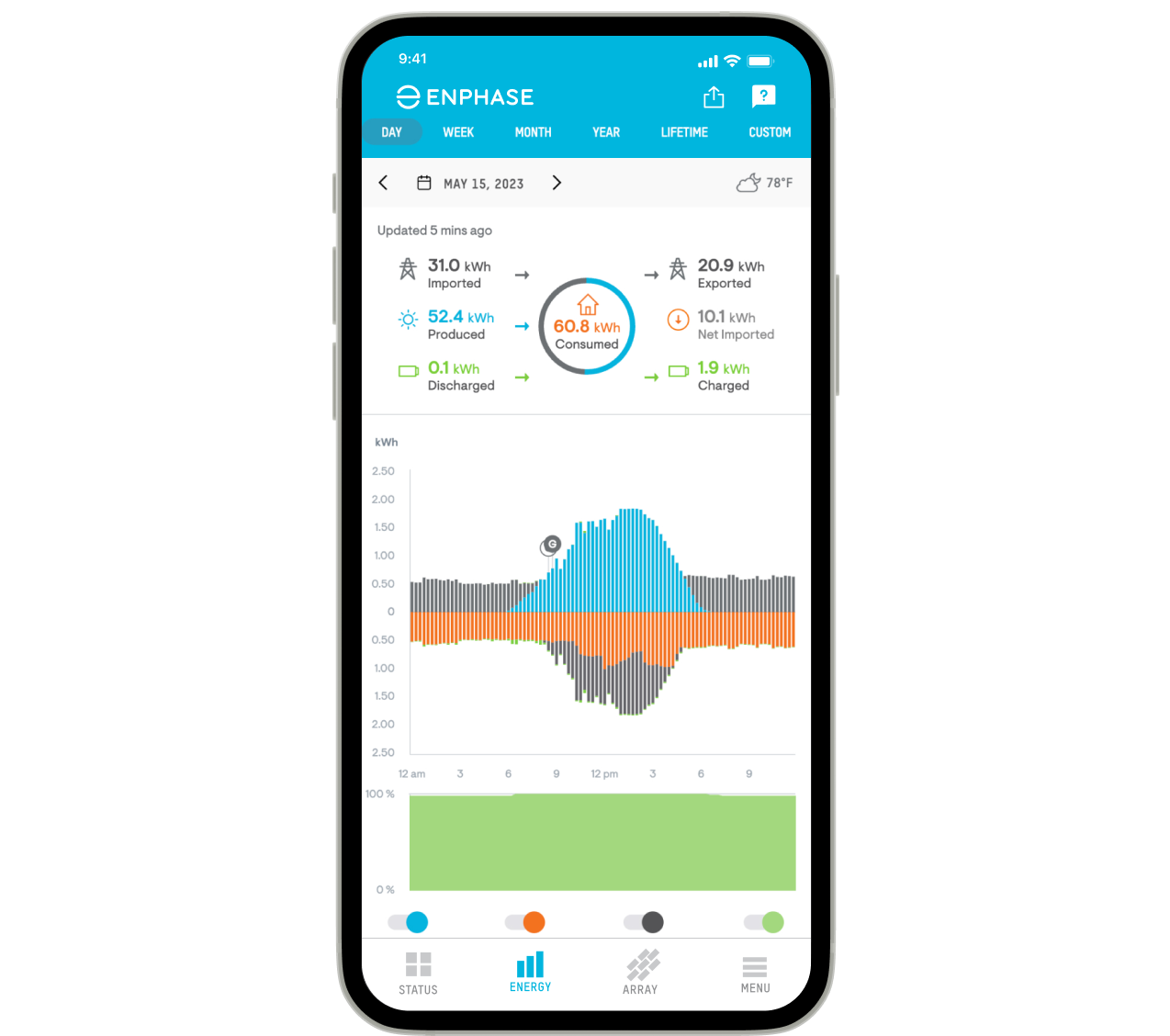
See production and consumption together.
Actual Enphase product imagery. Manufacturer demo data.
Explore the Enphase App ↗
Older solar. Better visibility.
You shouldn’t need a surprise bill to find out something changed.
Many older systems have no monitoring, lost connectivity or production-only data. We evaluate compatible options to restore access or add the monitoring your home needs.
Production monitoringUnderstand output, trends and available equipment alerts.
Consumption monitoringSee how your home uses energy and when it draws from the grid.
✓
Ongoing performance reviewUse better data to catch issues earlier and plan around changing demand.
Consumption monitoring requires compatible sensors and installation. Enphase features, panel-level data and battery controls depend on the equipment. Other monitoring platforms may suit non-Enphase systems.
Your starting point
Answer a few quick questions for a tailored review checklist. If you don’t know your NEM program or system details, we’ll help you find them.
Email opens a draft in your email app. Review it and add your contact details before sending.
Clear answers
Your system, utility and agreement matter. We start there.
No. A bill can reflect higher usage, an undersized system, time-of-use rates, export credits or fixed charges. We compare production with expected performance before recommending repairs or more equipment.
We can develop an estimate from available billing and production history, the remaining billing cycle, seasonal demand and your tariff. If the data is incomplete, we identify what is missing. Weather, rates and future usage can change the result. Solar Billing Plan customers need a review of monthly bills as well as the annual settlement.
It can. Expansions are subject to utility-specific size limits and interconnection requirements. A qualifying independent non-export addition may offer another path. We verify eligibility, controls and the required application before proceeding; adding separate equipment alone is not enough.
An eligible battery addition may retain the remainder of an existing NEM legacy period. We confirm the configuration, interconnection requirements and whether it makes financial sense for your home. Adding a battery does not restart or extend that legacy period.
Yes. We can evaluate an independent CSS addition for remaining energy needs. Your provider’s agreement, access rights, warranty and required approvals must be reviewed first. Existing lease or PPA payments continue, and service on provider-owned equipment may need to go through that provider.
Often, yes. We check equipment compatibility, electrical access and connectivity to determine whether production and consumption monitoring can be added or restored. Panel-level visibility is available only with supported equipment; whole-system monitoring may be the appropriate option for an older system.
The goal is to address avoidable costs with a practical plan. A zero bill is not guaranteed: fixed fees, non-bypassable charges, weather, rates and usage may leave remaining charges. We compare the complete cost of an upgrade with its expected benefit.
Let’s find out what’s behind your true-up, and what makes sense for the system you already have.